Introduction
A State Coming Into Its Own
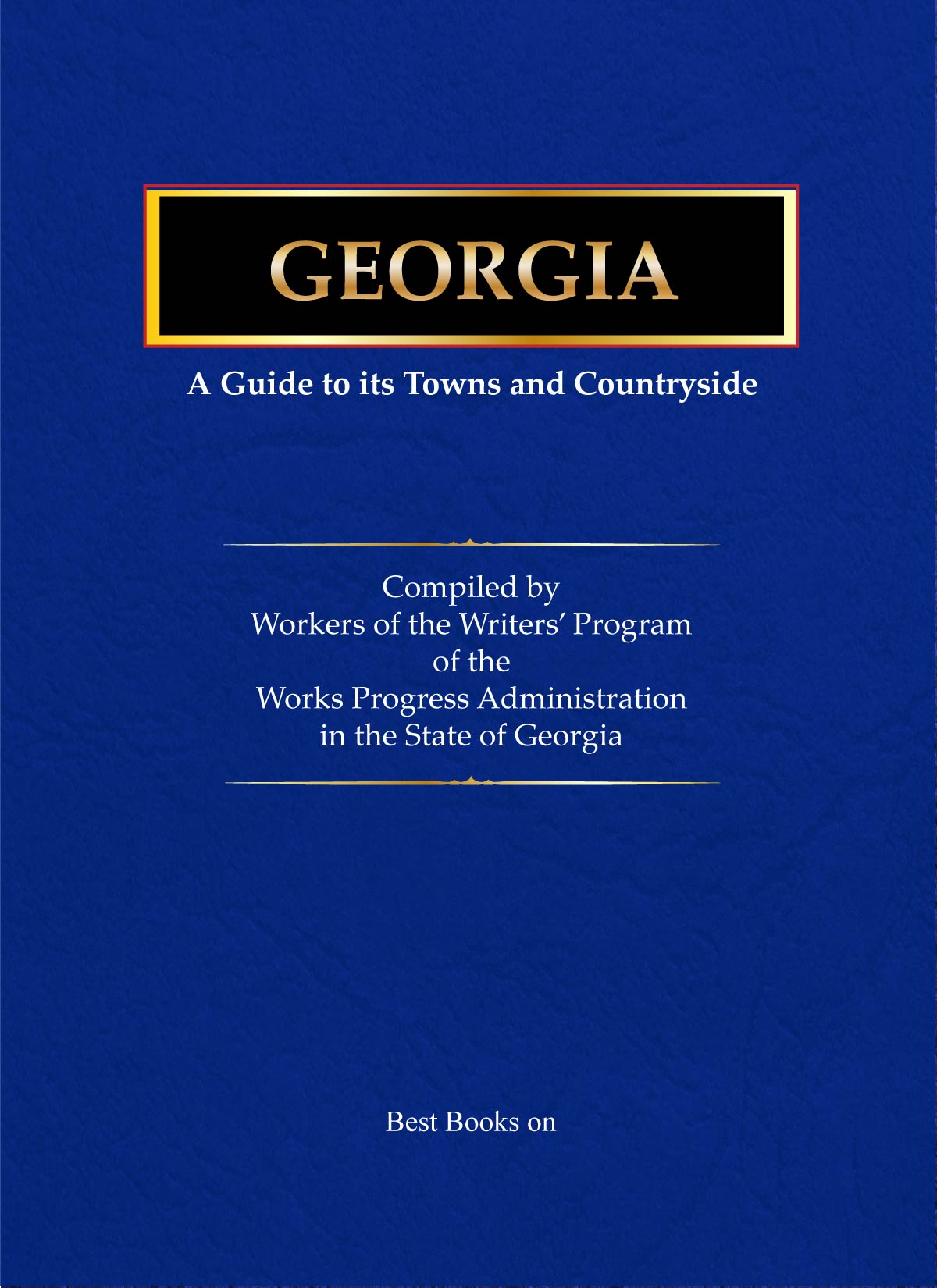
Georgia’s guide was first published in April 1940 by the University of Georgia Press in Athens, sponsored by the Georgia Board of Education. Its foreword takes the form of a letter from Governor E. D. Rivers, written from the Executive Department in Atlanta, celebrating a decade of growth he describes as “a steady, progressive climb” in industry, education, and commerce, and crediting State and Federal conservation, erosion-control, and reforestation programs with helping Georgians appreciate resources running from five-thousand-foot mountain elevations in the north to tidewater resorts on the coast.
The preface, signed by State Supervisor Samuel Y. Tupper, Jr. and Assistant State Supervisor Kathryn A. Hook, is disarmingly frank about how the project unfolded. Many staff members, longtime Georgia residents, found themselves “acquainted with our own state” for the first time only through the work of researching it, traveling broken roads, shivering in frigid old houses, and shouting questions at deaf caretakers. The editors describe weighing historical accuracy against the romance of regional legend, noting that they treated tales of cliff-leaping Indian maidens briefly while giving fuller space to documented figures such as Nancy Hart and Elijah Clarke, a balance they admit some consultants felt shorted their specialties.
The finished volume runs to four parts. The first lays out Georgia’s background across seventeen essays, from “Georgians at Home” through natural setting, archeology, history, agriculture, industry, and the arts, closing with architecture. The second profiles six cities, Athens, Atlanta, Augusta, Columbus, Macon, and Savannah. The third and longest section lays out seventeen numbered tours and their lettered branches, a road survey reaching from the Appalachian Trail in the north Georgia mountains to the barrier islands of the coast. A closing set of appendices supplies a chronology, bibliography, and index.
The preface also traces the project’s own institutional history, noting that Mrs. Carolyn P. Dillard, by 1940 the State Supervisor of the WPA’s Workers Service Program, had done much of the early work on the guide as the Federal Writers’ Project’s state director from 1935 to 1937 and continued advising afterward. Among the many specialists thanked by name are the architect Harold Bush-Brown, the historian E. Merton Coulter, Georgia State Historian Mrs. Louise Hays, and the sociologist Arthur Raper, alongside librarians and clergy across the state who helped verify the manuscript’s thousands of individual facts.
Read today, the Georgia guide preserves the voice of writers who treated their own home ground as a genuine subject of discovery, candid about the limits of space and source material even as they tried to hold, in one volume, a state they admit was almost too large and various to portray evenly.
Contents
Table of Contents
Library Record
Full Bibliographic Record
- Title
- Georgia: A Guide to Its Towns and Countryside
- Author
- Compiled and Written by Workers of the Writers’ Program of the Work Projects Administration in the State of Georgia (Georgia Writers’ Project)
- Series
- American Guide Series
- Sponsor
- Georgia Board of Education
- Foreword
- E. D. Rivers, Governor of Georgia
- Preface
- Samuel Y. Tupper, Jr., State Supervisor; Kathryn A. Hook, Assistant State Supervisor
- Publisher
- The University of Georgia Press, Athens
- Publication Date
- First published April 1940
- Description
- xxviii, 559 p.: illustrations, maps; 21 cm. Includes Chronology, Bibliography (p. 530–538), and Index.
- Subjects
- Automobile travel — Georgia — Guidebooks; Georgia — Description and travel; Georgia — History; Georgia — Guidebooks
View this title’s catalog record on WorldCat.org.